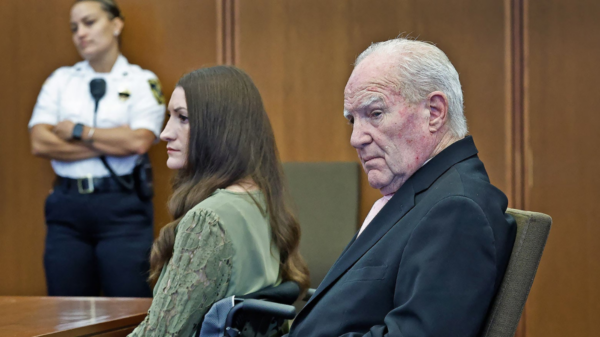
Lindsay Clancy’s attorneys made a last-ditch effort to remove the lone holdout juror in her murder trial, arguing that his reasoning reflected a bias against people suffering from severe mental illness.
The challenge came as the jury remained split 11-1 over whether Clancy should be held criminally responsible for killing her three young children in their Duxbury, Massachusetts, home in January 2023. After more than 36 hours of deliberations, the jury repeatedly told the court it could not reach a unanimous verdict.
The dispute over the holdout juror went beyond whether one person simply disagreed with the other 11. Clancy’s defense argued that the juror’s position suggested an unwillingness to fairly consider her mental illness, the central issue of the case.
Clancy’s attorneys maintained throughout the trial that she was suffering from postpartum psychosis when she killed her children and therefore was not criminally responsible. Prosecutors disputed that characterization, arguing that Clancy was depressed but understood the wrongfulness of her actions.
In an emergency filing, the defense argued that the holdout juror’s reasoning “reflects a bias against those who suffer from debilitating mental illness.”
The filing characterized mental illness as a protected category under the Fifth and Fourteenth amendments and drew a comparison to cases involving allegations of racial or ethnic prejudice during jury deliberations.
When evidence emerges suggesting that racial or ethnic bias influenced a juror, courts can be required to examine whether prejudice affected the deliberations, the defense argued. “The same considerations apply here in the context of mental illness,” Clancy’s attorneys wrote.
Concerns about the holdout juror surfaced publicly after the jury foreperson sent a note to Plymouth Superior Court Judge William Sullivan describing the deadlock.
According to accounts of the proceedings, the foreperson said one juror acknowledged having doubt but nevertheless refused to apply the court’s reasonable-doubt instructions. Defense attorney Kevin Reddington subsequently asked Sullivan to investigate or remove the juror.
Sullivan declined, concluding that the circumstances did not establish that the juror was refusing to follow the law rather than simply disagreeing with the rest of the panel. Judges are generally prohibited from intruding into the substance of legitimate jury deliberations merely because one juror reaches a different conclusion.