WASHINGTON — The Supreme Court issued a win to the Trump administration on Monday in its efforts to restrict mail-in ballots ahead of the 2026 midterm elections.
In a 6-3 decision Monday, the court’s conservative majority paused a lower-court injunction that had prevented the Trump administration from implementing portions of the order in 23 states and the District of Columbia. The court’s three liberal justices dissented.
The ruling comes just months before the November midterm elections and could have significant implications for election officials preparing to administer mail and absentee voting.
However, the Supreme Court did not issue a final ruling on whether Trump’s executive order is constitutional. Instead, the majority concluded that the states’ legal challenge was premature because several federal agencies had not yet completed the process of determining how the order would be implemented.
Trump signed Executive Order 14399, titled Ensuring Citizenship Verification and Integrity in Federal Elections, on March 31.
Among its provisions, the order directs the Department of Homeland Security to create citizenship lists containing residents who are U.S. citizens and will be at least 18 years old by an upcoming federal election. States would not be required to use those lists.
The order also instructs the attorney general to prioritize investigations and, when appropriate, prosecutions involving state or local officials who issue federal-election ballots to people who are not eligible to vote.
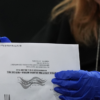
Another provision directs the U.S. Postal Service to begin a rulemaking process that includes proposed requirements for mail-ballot envelopes, including unique barcodes designed to improve ballot tracking.
The Trump administration has presented the measures as an effort to strengthen election security and public confidence in federal elections.
A coalition of 23 states and the District of Columbia sued to stop portions of the executive order, arguing that the president was attempting to exercise powers over elections that the Constitution gives primarily to states and Congress.
U.S. District Judge Indira Talwani sided with the states in June and blocked portions of the order from being implemented for the 2026 election in the jurisdictions participating in the lawsuit. A federal appeals court subsequently declined to lift that injunction, prompting the Trump administration to seek emergency relief from the Supreme Court.
The administration argued that the lawsuit was premature because federal agencies had not finished developing the policies necessary to carry out Trump’s directives.
The Supreme Court ultimately agreed that the injunction should be put on hold while the litigation proceeds.
The decision represents a significant victory for the White House, but it does not guarantee that every part of Trump’s mail-voting agenda will take effect before November.
A separate court order continues to restrict the Postal Service from implementing part of the president’s directive nationwide, meaning substantial legal barriers remain.
That distinction is important: the Supreme Court’s action addresses whether the administration can move forward while litigation continues, rather than settling the broader constitutional dispute over presidential authority to regulate federal elections.
The case now continues in the U.S. Court of Appeals for the First Circuit. Under the Supreme Court’s order, the stay will remain in place during the appeals process and through any timely request for Supreme Court review.