The Justice Department has launched an investigation into Minnesota officials, including Gov. Tim Walz and Minneapolis Mayor Jacob Frey, two sources confirmed to FWRD AXIS News.
The investigation is looking into if the leaders conspired to impede federal immigration agents through public statements. Both Walz and Frey have been critical of the federal response and questioned why the FBI cut out local authorities from the probe into the shooting of Renee Good.
CBS News was the first to report on the investigation.
Walz said in a statement Friday the investigation is purely political.

“Two days ago it was Elissa Slotkin. Last week it was Jerome Powell. Before that, Mark Kelly. Weaponizing the justice system and threatening political opponents is a dangerous, authoritarian tactic,” he said. “The only person not being investigated for the shooting of Renee Good is the federal agent who shot her,” he said.
Frey said in a statement in response to reports of the DOJ investigation that he “will not be intimidated.”
“This is an obvious attempt to intimidate me for standing up for Minneapolis, our local law enforcement, and our residents against the chaos and danger this Administration has brought to our streets,” he said.
While the Justice Department declined to comment, Attorney General Pam Bondi wrote on X: “A reminder to all those in Minnesota: No one is above the law.”
The news of the reasoning for the investigation, using political speech by public officials, raises First Amendment concerns.
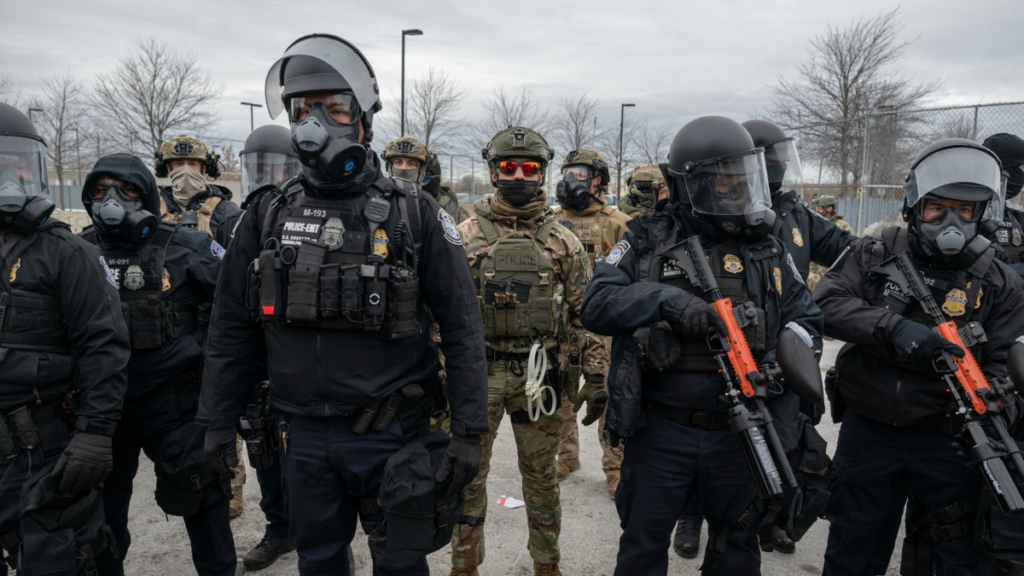
A federal judge in Minnesota is temporarily barring federal immigration agents from retaliating against people engaging in lawful and peaceful protest as well as those observing their activities under the Department of Homeland Security’s Operation Metro Surge.
In an order Friday, U.S. District Judge Katherine Menendez ruled that federal agents deployed to the state under the operation are prohibited from arresting or detaining peaceful protesters “in retaliation for their protected conduct and absent a showing of probable cause or reasonable suspicion that the person has committed a crime or is obstructing or interfering with the activities.”
“The act of safely following Covered Federal Agents at an appropriate distance does not, by itself, create reasonable suspicion to justify a vehicle stop,” the judge wrote.