



































President Donald Trump renewed his controversial call for the federal government to intervene in state-run elections, saying Tuesday that if states cannot conduct what he views as “honest” elections, Washington should step in — a proposal that has drawn fierce debate across the political spectrum.
Trump’s remarks, made during an Oval Office event with Republican lawmakers and detailed in a separate podcast interview, mark a sharp escalation in his long-running claims of widespread voter fraud in the 2020 Election and his push to reshape how elections are administered in the United States.
Trump, echoing comments from a Monday interview with former FBI Deputy Director Dan Bongino, suggested Republicans should “take over the voting” in at least 15 states — language critics say amounts to endorsing federal intervention in elections normally overseen by states under the Constitution.
At the White House on Tuesday, Trump doubled down.
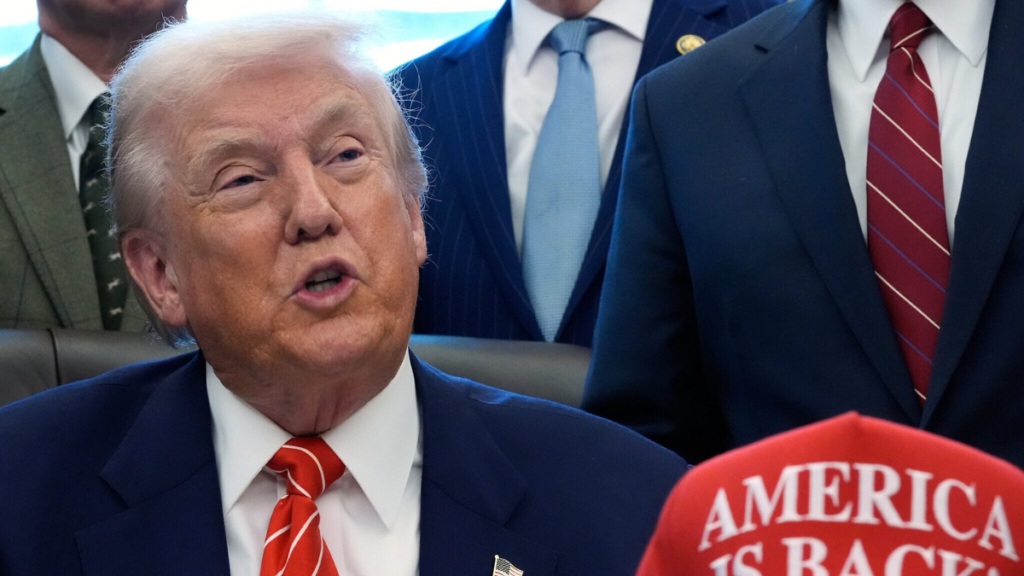
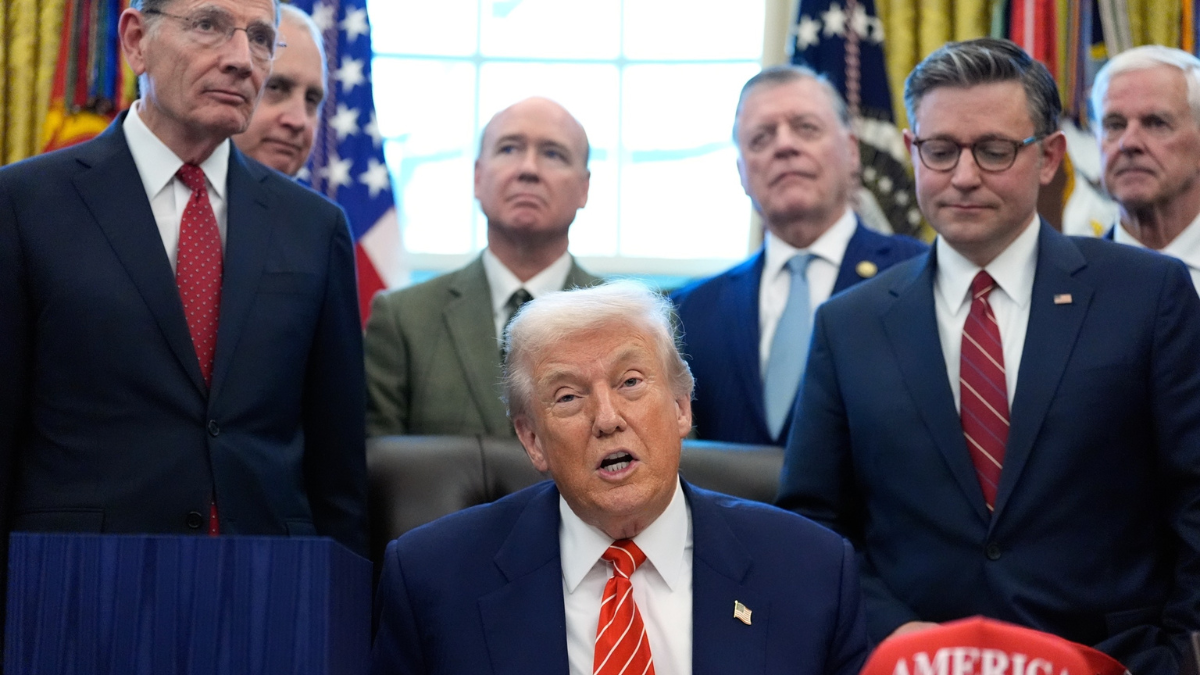
“If a state can’t run an election, I think the people behind me should do something about it,” Trump said as he held a bill signing in the Oval Office surrounded by Republican lawmakers. “Because, you know, if you think about it, the state is an agent for the federal government in elections. I don’t know why the federal government doesn’t do ’em anyway.”
The White House has sought to soften the rhetoric, saying Trump was referring broadly to legislative changes, such as a national voter ID requirement proposed in the SAVE Act — a bill his allies are pushing in Congress to establish uniform voter ID standards and other election rules.
Despite those efforts, Senate Republican leaders have publicly distanced themselves from Trump’s most expansive language about federal control over elections. Senate Majority Leader John Thune said he does not support “federalizing” election administration, citing the Constitution’s allocation of election authority to the states.
Under the U.S. Constitution, states are primarily responsible for administering elections, with limited federal oversight, and Congress is empowered to regulate aspects of federal contests. Legal experts have warned that Trump’s proposals would clash with long-standing constitutional frameworks and could face immediate legal challenges.
Democrats have condemned the comments as an attack on democratic norms, arguing that federal takeover of elections would undermine public confidence and concentrate too much power in the executive branch.
The debate comes as the nation approaches the 2026 midterm elections, with Trump’s allies pushing for stricter voting laws and Republicans seeking to bolster turnout advantages. Election officials who experienced intense scrutiny and threats after the 2020 cycle have voiced concern about renewed pressure and the potential chilling effect on election administration.
White House officials maintain that Trump supports secure and fair elections, pointing to his advocacy for standardized voting procedures, even as critics argue his rhetoric fuels mistrust and political division.
At this stage, Trump’s call for federal intervention remains rhetorical. Any move to shift election administration from state to federal control would require major legislative changes and face rigorous constitutional scrutiny. With bipartisan skepticism and court challenges likely, the proposal’s future is uncertain — but the conversation it has ignited shows how deeply election integrity and federal authority will shape U.S. politics heading into 2026 and beyond.