
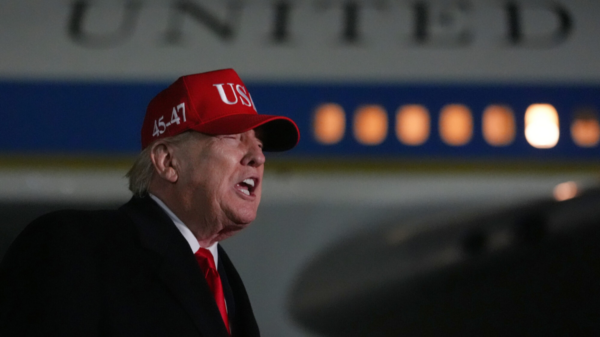















WASHINGTON — Just over 24 hours after signing a peace agreement to celebrate a “new dawn” in the Middle East, President Donald Trump faced tough questions as he returned to Washington on the future of Gaza.
One main issue is the disarmament of Hamas, which was called for in Trump’s 20-point peace plan but was not a part of the initial phase of the agreement.
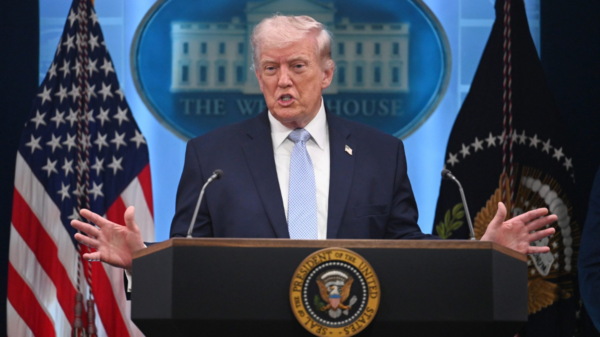
Trump was asked about this by reporters and what comes next for Gaza, but he failed to provide any details.
“Well, they’re going to disarm, and because they said they were going to disarm. And if they don’t disarm, we will disarm them,” Trump said.
“I don’t have to explain that to you, but if they don’t disarm, we will disarm them. They know I’m not playing games, okay. … And if they don’t disarm, we will disarm them, and it’ll happen quickly and perhaps violently. But they will disarm. Do you understand me?” Trump continued.

While returning to Washington, Trump told reporters on Air Force One that his focus will now shift to rebuilding Gaza.
Trump didn’t elaborate, saying issues of Palestinian statehood and governing of the Gaza Strip would be worked out later.
“Well, we’re gonna have to see,” he said. “I mean, a lot of people like the one-state solution. Some people like the two-state solution. We’ll have to see.”
Trump joined over 20 world leaders in Sharm El-Sheikh, Egypt, on Monday for a discussion on the future of Gaza and to sign documents, making the Israel-Hamas ceasefire agreement official.
Palestinian Authority President Mahmoud Abbas, French President Emmanuel Macron, German Chancellor Friedrich Merz, British Prime Minister Keir Starmer, and former prime minister Tony Blair, as well as officials from Qatar, Egypt, Jordan, the United Arab Emirates, and Turkey, all gathered for the event.
Trump, Egyptian President Abdel Fattah el-Sisi, Turkish President Recep Tayyip Erdoğan, and Qatari Emir Tamim bin Hamad Al Thani, along with other world leaders, signed the documents to make the ceasefire official.