




























The number didn’t arrive with a single announcement. There was no dramatic speech, no formal declaration of escalation. Instead, it grew steadily—ship by ship, unit by unit—until more than 50,000 U.S. troops were positioned across the Middle East, forming the backbone of America’s expanding campaign tied to the 2026 war with Iran.
According to defense officials and military data, the buildup represents the largest sustained U.S. presence in the region since the early years of the Iraq War.
The surge didn’t happen overnight. It began in late January, when Washington started moving aircraft carriers, fighter squadrons, and missile defense systems into position amid rising tensions with Tehran.
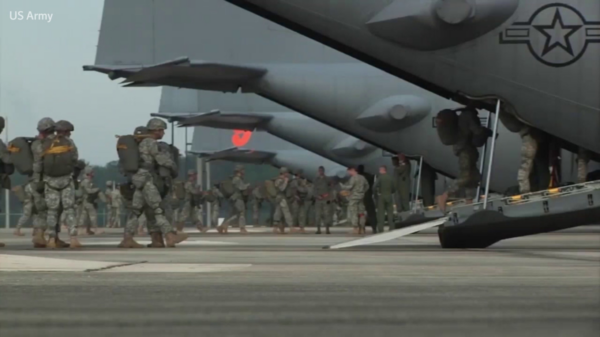
Elite Marine Expeditionary Units, Army paratroopers from the 82nd Airborne Division, and additional infantry forces were deployed in waves—each designed to give the Pentagon more options without committing to a full-scale invasion.
In recent days alone, thousands more troops have arrived, including Marines aboard amphibious assault ships capable of launching rapid strikes or seizing strategic territory.
Behind the scenes, officials have even weighed sending up to 10,000 additional troops, a move that could push the total far beyond the current 50,000 mark.
The number itself is striking—but it doesn’t necessarily signal an imminent invasion.
Instead, military analysts say the troop presence reflects a strategy of flexibility. These forces are spread across multiple countries and bases, positioned to respond quickly to a range of scenarios:
- Protecting shipping lanes in the Strait of Hormuz
- Securing U.S. bases and allies from Iranian retaliation
- Supporting air and naval strikes
- Preparing for limited ground operations, if ordered
Some plans under discussion include targeting key Iranian infrastructure, such as missile sites or even the strategically critical Kharg Island, which handles a large share of Iran’s oil exports.
Casualties are mounting. Hundreds of American service members have been injured, and multiple deaths have been reported, underscoring the growing risks of a prolonged conflict.
Meanwhile, the broader region is feeling the strain—from disrupted oil markets to escalating proxy attacks involving Iran-backed groups.