








































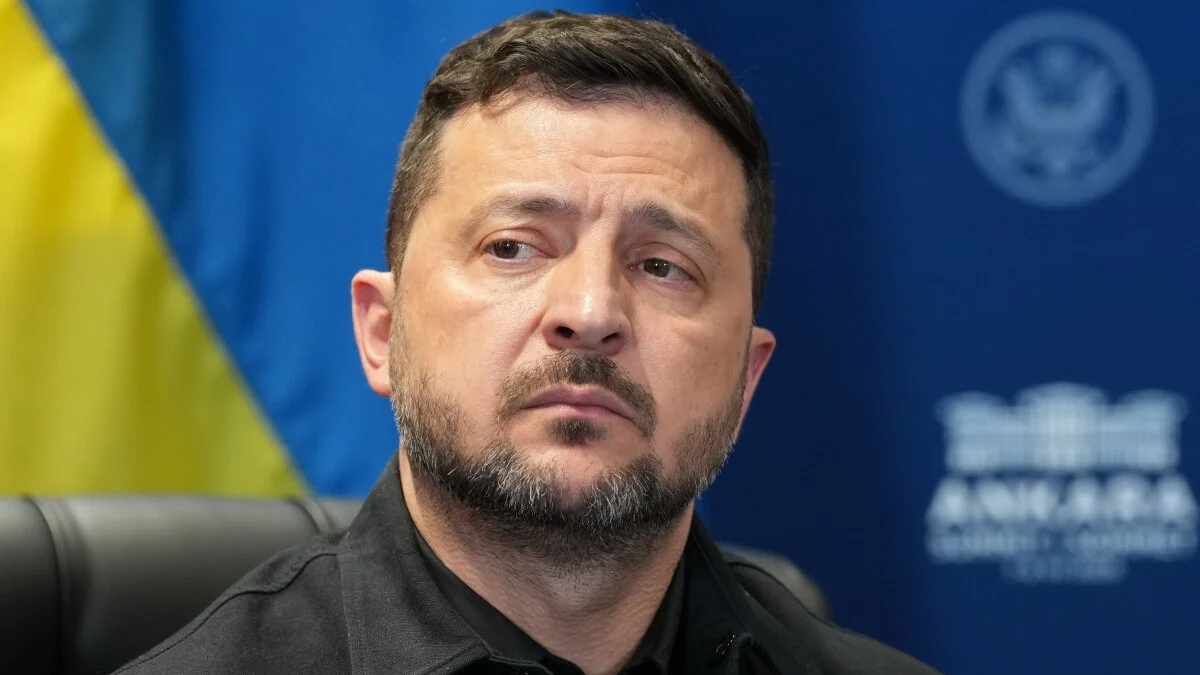
KYIV, Ukraine — Ukrainian President Volodymyr Zelenskyy said his country received no advance intelligence warning from international partners before Russian ballistic missiles struck the capital this week, raising fresh questions about Western intelligence cooperation as Moscow intensifies its attacks on Ukrainian cities.
Zelenskyy said Tuesday that five Russian ballistic missiles struck civilian infrastructure in Kyiv without prior notification from Ukraine’s allies, whose intelligence capabilities have played a crucial role in helping the country detect incoming attacks.
The Ukrainian leader condemned the strikes and emphasized the importance of timely intelligence in protecting civilians.
“This is precisely what helps prevent people from being killed — when there is an early warning about ballistic missiles,” Zelenskyy wrote on social media.
He did not identify which countries had failed to provide warnings or suggest that intelligence assistance had been deliberately suspended.
Trump Denies Intelligence Sharing Has Stopped
Zelenskyy’s remarks come amid growing friction between Kyiv and Washington over Ukraine’s military strategy and its continued attacks on Russian energy facilities.
President Donald Trump has pressured Ukraine to halt strikes against Russian oil refineries as his administration seeks to reduce energy prices and negotiate an end to the war.
Asked Wednesday whether the United States had stopped providing intelligence to Ukraine, Trump rejected the suggestion.
“We are helping them, and we are sharing intel,” Trump told reporters, adding that Washington was working with both Ukraine and Russia to bring the conflict to an end.
Despite those assurances, uncertainty remains over why Ukraine did not receive advance notification of the missile launches.
Ukraine’s foreign minister, Andrii Sybiha, said intelligence cooperation was continuing and suggested that the failure to detect the strikes was related to the type of weapons Russia used.
The explanation leaves unresolved whether the missed warnings resulted from technical limitations or other factors.
Russian Strikes Target Ukraine’s Energy Infrastructure
The intelligence concerns emerged as Russia launched additional attacks against Kyiv, including a strike on a thermal power plant critical to the capital’s energy supply.
Zelenskyy said Ukraine again received no advance warning from its partners before the subsequent attack.
Russian missiles also struck residential areas, causing civilian casualties and forcing emergency crews to respond to damaged buildings.
The attacks have added to concerns about Ukraine’s ability to protect its population and maintain essential services as colder weather approaches.
Russian forces have increasingly targeted electricity generation and other critical infrastructure throughout the conflict, leaving communities vulnerable to power outages and disruptions to heating and water supplies.
Ukraine has relied heavily on Western-supplied air defense systems, including American-made Patriot batteries, to intercept incoming missiles. However, ballistic missiles remain particularly difficult to stop because of their speed and limited warning time.
Dispute Over Proposed Energy Ceasefire
The renewed attacks also cast doubt on Trump’s announcement that Russia and Ukraine had agreed to halt strikes against each other’s energy infrastructure.
Trump announced the proposed arrangement over the weekend, but neither Moscow nor Kyiv confirmed a formal agreement.
Zelenskyy said Ukraine had refrained from attacking Russian energy facilities for two days following Trump’s announcement, while accusing Moscow of continuing its bombardment of Ukrainian infrastructure.
The Ukrainian president has indicated that Kyiv would consider a reciprocal halt to energy strikes, provided Russia makes credible commitments to stop targeting Ukrainian facilities.
The disagreement underscores the challenges facing Washington’s diplomatic efforts as both sides continue military operations despite discussions of a potential ceasefire.
Questions Remain Over Western Support
The latest developments highlight Ukraine’s dependence on international intelligence assistance more than four years after Russia launched its full-scale invasion in February 2022.
Western intelligence helps Ukrainian forces identify potential missile launches, track Russian military movements and provide civilians with time to seek shelter.
Without reliable advance warnings, Ukrainian authorities may have only minutes to respond to certain attacks, particularly those involving ballistic missiles.
Questions about the reliability of that support have intensified following reports that American officials warned Ukraine of potential consequences if it continued striking Russian oil refineries.
CBS News reported Wednesday that sources familiar with the situation believed the United States may have deliberately withheld warnings, although that allegation has not been established. Trump maintains that intelligence sharing continues.
For Zelenskyy, the immediate concern remains ensuring that Ukraine receives the information necessary to defend its cities and protect civilians.
As Russia continues its missile campaign and Washington presses for a diplomatic resolution, the reliability of Western intelligence cooperation could prove increasingly consequential to Ukraine’s defense.