







































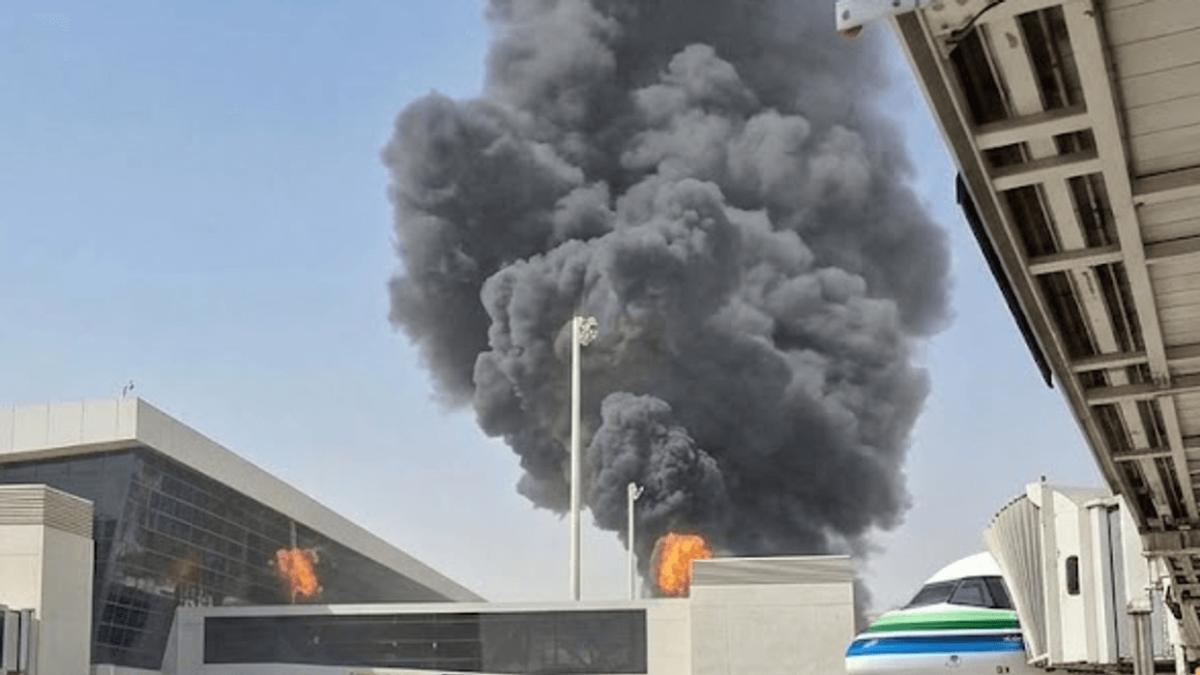
RIYADH, Saudi Arabia — At least 12 people were killed and 309 others injured Saturday after an attack struck King Khalid International Airport in Saudi Arabia’s capital, forcing authorities to suspend airport operations as fighting between the kingdom and Iran-backed Houthi rebels in neighboring Yemen escalates.
Saudi Arabia’s General Authority of Civil Aviation confirmed the casualties early Sunday, saying the dead included four Saudi citizens, two Bangladeshi nationals and one person each from the United States, Egypt, Jordan, Syria, Palestine and Sudan.
Several of the injured remained in critical condition, according to Saudi officials, while emergency personnel transported victims to hospitals across the capital.
The attack marks one of the deadliest strikes against Saudi Arabia in more than a decade and comes amid a renewed military confrontation that has increasingly placed civilian airports, commercial aviation and critical infrastructure in danger.
A missile struck an airport complex housing Terminals 3 and 4, which serve domestic flights, according to a regional official cited by The Associated Press.
The Saudi-led coalition fighting in Yemen blamed the Houthis for the attack, although the rebel group had not publicly claimed responsibility for Saturday’s strike as of the latest reports.
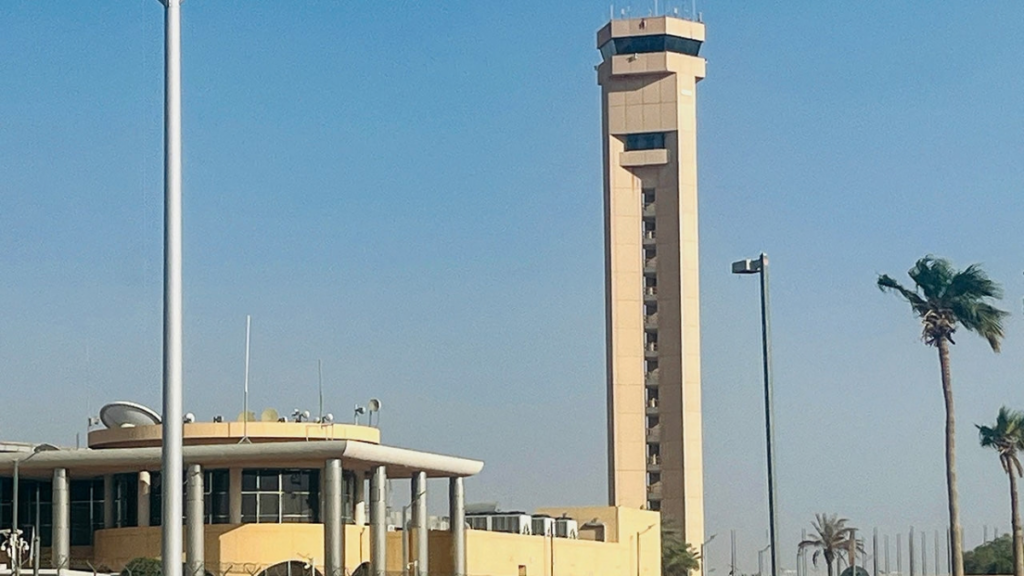
Airport Evacuated As Explosions Rock Saudi Capital
The attack prompted an evacuation of King Khalid International Airport, a major transportation hub serving Riyadh and connecting Saudi Arabia with international destinations.
Saudi aviation authorities temporarily suspended operations while emergency crews assessed damage and security officials examined the airport’s facilities.
A Riyadh resident, Ahmed Sayed, told The Associated Press that he heard at least two powerful explosions in the capital.
Airport officials advised travelers to contact their airlines before departing for the facility as flight cancellations and disruptions spread.
The shutdown created significant uncertainty for passengers traveling through the kingdom, with airlines canceling flights or adjusting schedules in response to the security situation.
Saudi authorities said the extent of the damage remained under assessment.
The attack followed several strikes against the same airport earlier in the week.
On Thursday, three Saudi nationals, including a pilot employed by the national airline Saudia, were killed in attacks on King Khalid International Airport.
The airline subsequently identified the deceased pilot as Captain Hamoud bin Ali Al-Kalthami and expressed condolences to his family and colleagues.
Earlier attacks also targeted airports in other parts of Saudi Arabia, including Abha, as the Houthis expanded their military campaign against the kingdom.
Trump Considers American Military Involvement
The escalating violence has drawn attention from Washington, where President Donald Trump indicated Saturday that the United States could become directly involved in Saudi Arabia’s military campaign against the Houthis.
Asked by reporters whether American forces might join Saudi strikes against the group, Trump said:
“We may. We’re going to look at it.”
The president said his administration was reviewing the latest attack before deciding how to respond.
His remarks raised the possibility of an expanded American military role in Yemen, where years of conflict have already contributed to a severe humanitarian crisis.
Secretary of State Marco Rubio condemned the attacks against Saudi Arabia, including the strike on Riyadh’s airport, and called for an end to attacks threatening civilians.
The United States has maintained a longstanding security relationship with Saudi Arabia, making the renewed violence a significant challenge for American policymakers as the broader confrontation involving Iran continues.
Washington has not announced a decision to join the latest Saudi military operations.
Houthis Blamed As Fighting In Yemen Intensifies
The Saudi-led coalition accused the Houthis of deliberately targeting civilian aviation infrastructure and characterized Saturday’s airport attack as a war crime.
Coalition spokesperson Maj. Gen. Turki al-Malki pledged a decisive response under international humanitarian law.
The Houthis, an Iran-backed armed movement controlling substantial territory in Yemen, have repeatedly targeted Saudi facilities with missiles and drones during periods of confrontation with the kingdom.
The group previously claimed responsibility for attacks against King Khalid International Airport, including a ballistic missile strike Thursday.
Saturday’s attack occurred as Saudi-backed forces continued a major military offensive against the Houthis in Yemen, where both sides have been battling for control of strategically important territory.
The fighting has intensified around Yemen’s Red Sea coastline and the Bab el-Mandeb Strait, a vital maritime passage connecting the Red Sea with the Gulf of Aden.
Control of the waterway carries considerable international importance because commercial vessels and energy shipments traveling between Europe and Asia depend on the route.
The Houthis have portrayed their attacks on Saudi aviation facilities as retaliation for Saudi military operations and restrictions affecting airports in Yemen.
Those claims do not establish responsibility for Saturday’s attack, which the group had not independently acknowledged.
Foreign Governments Issue Security Warnings
The attack also prompted warnings from foreign diplomatic missions in Saudi Arabia.
The United States Embassy urged American citizens to avoid King Khalid International Airport and surrounding areas because of the security threat.
British, Irish and Canadian officials issued similar advisories, warning their nationals about the situation in Riyadh.
The warnings underscored concerns that additional attacks could threaten travelers, airport workers and other civilians.
Saudi Arabia’s Foreign Ministry advised citizens whose travel plans had been disrupted to contact Saudi diplomatic missions abroad for assistance.
Regional governments, including Qatar, Jordan and Oman, expressed condemnation or solidarity following the attack.
A Growing Threat To Regional Stability
The latest violence represents a significant escalation in a conflict that increasingly extends beyond Yemen’s borders.
For Saudi Arabia, repeated strikes against its airports raise questions about the security of civilian infrastructure and the effectiveness of defenses against missile and drone attacks.
For the United States, the central question is whether supporting Saudi Arabia will remain a diplomatic and defensive effort or develop into more direct military involvement.
Any American decision to participate in strikes against the Houthis could further complicate an already volatile regional conflict involving Iran and its allies.
The consequences are also immediate for civilians.
Saturday’s attack killed travelers and other individuals from multiple countries, while hundreds of people were left injured and families faced uncertainty about the condition of their loved ones.
The disruption of one of Saudi Arabia’s most important airports also illustrates how quickly regional military confrontations can affect international travel and economic activity.
As Saudi authorities investigate the attack and assess the damage, the possibility of additional strikes remains a major concern.
For now, the immediate priorities are treating the wounded, securing the airport and determining when flights can safely resume.
The broader question is whether Saudi Arabia and its allies can prevent the latest escalation from drawing more countries into the fighting.