

































WASHINGTON — A second federal judge has blocked the implementation of President Donald Trump’s executive order restricting mail voting, adding another legal obstacle for the administration as voting gets underway in the 2026 midterm elections.
U.S. District Judge Carl J. Nichols in Washington issued a preliminary injunction late Sunday preventing the U.S. Postal Service from implementing key parts of the administration’s mail-ballot rules.
“Plaintiffs have demonstrated that, absent an injunction, there is an increased risk that a significant number of otherwise appropriate absentee or mail-in ballots will ultimately not be counted in the upcoming elections,” Nichols wrote in issuing the preliminary injunction. “The public has a strong interest in ensuring that doesn’t happen.”
The ruling comes as the Supreme Court is already considering an administration appeal involving a separate challenge to the policy.
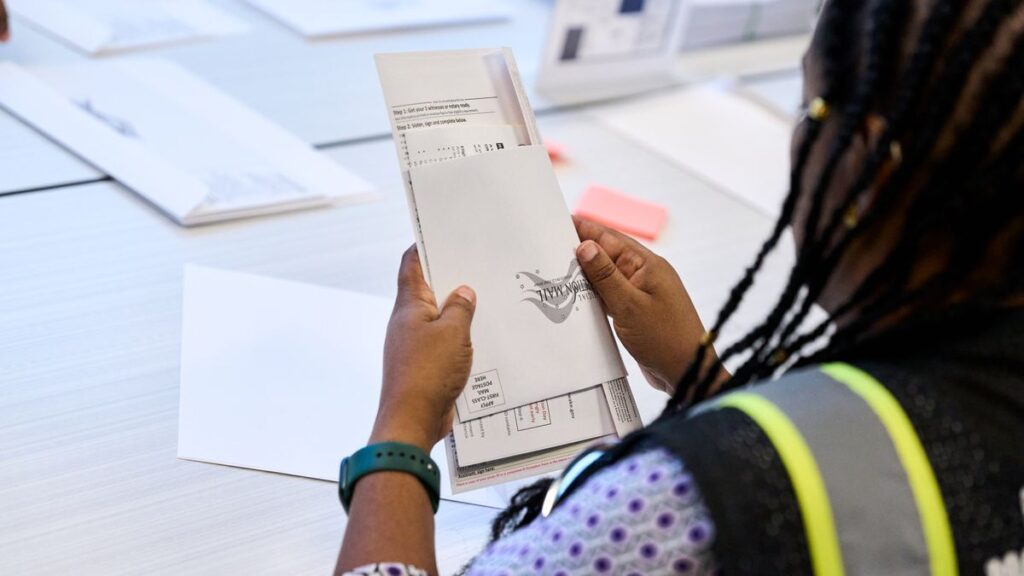
The regulations would require states to submit ballot-envelope designs to the Postal Service for approval and upload voter information to a federal online system.
Critics of the policy argue those requirements would be difficult, if not impossible, for states to implement before November and could result in otherwise valid ballots not being counted.
Mail ballots are already being distributed in several states, with additional states preparing to begin the process in the coming days.
Nichols’ ruling follows a separate injunction issued by U.S. District Judge Indira Talwani in Boston.
Talwani extended her block on the Postal Service rules earlier this month, prompting the Trump administration to again seek intervention from the Supreme Court.
The legal disputes are unfolding as election officials warn there is little time remaining to make major changes to voting procedures.
Nearly one-third of U.S. voters cast ballots by mail, according to reporting cited in the litigation.
The administration argues the new rules are intended to strengthen election integrity.
Democrats say the president and Postal Service are attempting to impose election requirements that exceed their constitutional authority and could prevent eligible voters from having their ballots counted.
The Supreme Court has previously allowed portions of Trump’s election-related policies to move forward on procedural grounds, but it has not issued a final ruling on the legality of the mail-ballot order.
For now, the administration faces injunctions in two federal courts while states continue preparing for the November election under existing procedures.
With ballots already entering the mail, the legal fight is increasingly running up against the election calendar itself.